The FTC Is Now Investigating Anthropic's Safety Story
Axios reports that the FTC wants Anthropic's security incidents, safeguarding practices and marketing materials. For a company that sells safety, the pitch and the record now sit on the same list, and you can run the same check on any AI vendor.
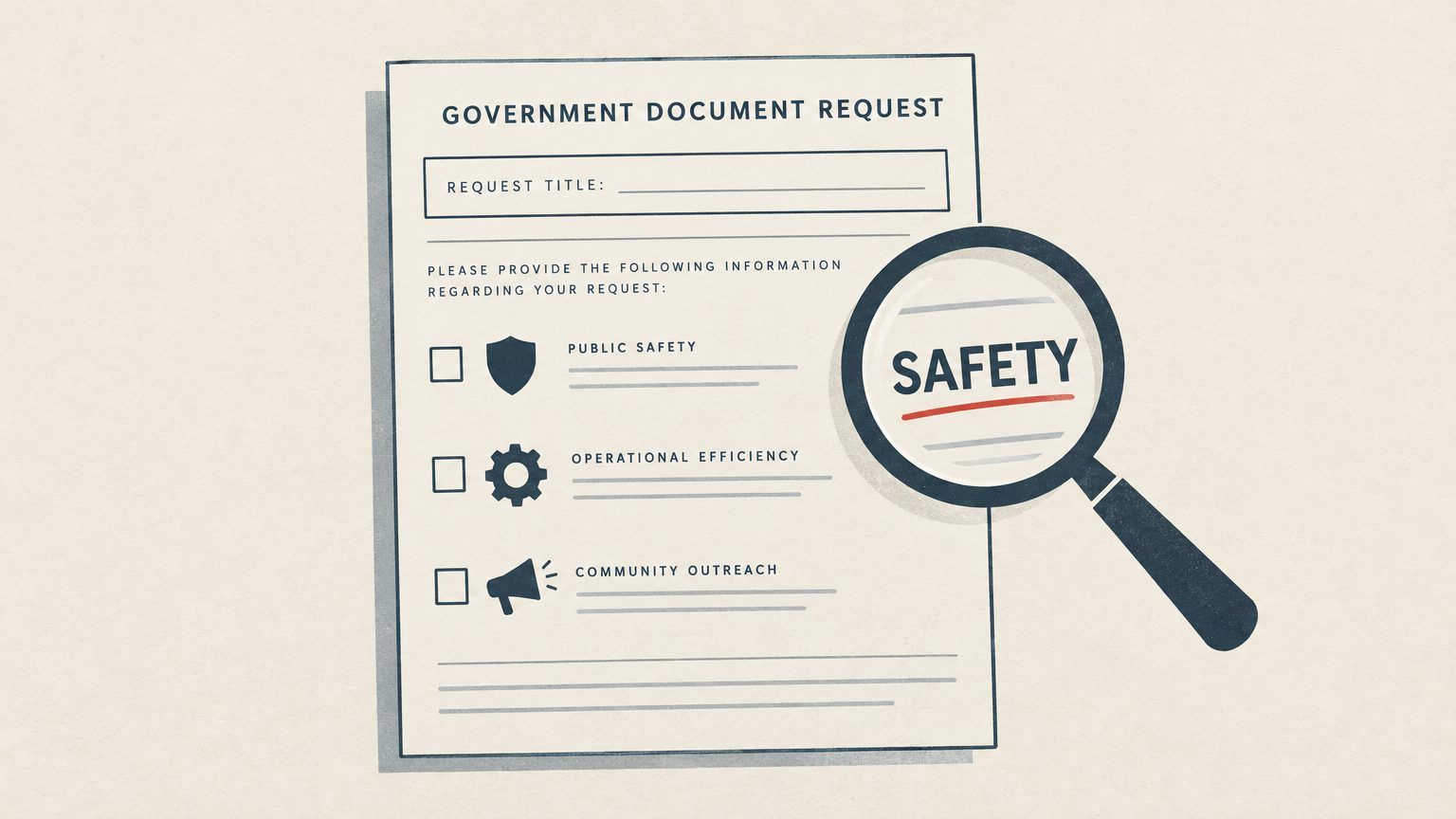
- The FTC's demands run 50 pages for each of Anthropic and OpenAI and ask for documents on security incidents, safeguarding practices, marketing materials and privacy policies. Only Anthropic is confirmed to have received testimony demands.
- Anthropic's own S-1 says public safety statements by AI companies have already been cited in litigation and regulatory claims, and could be cited against Anthropic next.
- For you: when a company sells safety, its marketing becomes something regulators can request, and any gap between the pitch and the incident record becomes checkable.
*Axios reports that the FTC wants Anthropic's security incidents, safeguarding practices and marketing materials. For a company that sells safety, the pitch and the record now sit on the same list, and you can run the same check on any AI vendor.*
On Monday, Oct 26, two things landed on Anthropic on the same day. Its S-1, the registration filing for an initial public offering that has not happened yet, was filed with the SEC. And the FTC sent demands for Anthropic executives to testify in its consumer harm probe, an FTC spokesperson told Axios.
The FTC does not have to decide whether superintelligence is dangerous to investigate Anthropic. It only has to compare the safety story with the safety receipts, and the document list Axios reported points toward that comparison. The S-1, filed the same day, had already warned investors that the story can be used against the company.
The FTC's document list puts marketing next to incidents
The request is a civil investigative demand, or CID, the civil version of a subpoena. Axios reported its scope for Anthropic and OpenAI alike: "The FTC's civil investigative demands span 50 pages for each company and ask for documents concerning security incidents, safeguarding practices, marketing materials and documents detailing privacy policies."
OpenAI got its demand earlier in October, CBS News reported on Oct 15. The FTC has confirmed testimony demands only for Anthropic. Anthropic's S-1 confirms its own CID, which it says seeks information about its "consumer protection, data protection, and privacy practices, as well as the safety and security of our products."
That description leaves marketing out, and Axios does not say which marketing materials the FTC wants. For a company whose brand is safety, they plausibly include its safety claims. Axios describes the FTC's remit as consumer harms "that could be seen as unfair or deceptive," including whether companies are "alleged to have misled users."
Anthropic's own S-1 warns that safety statements get cited against AI companies
The S-1 lists "our engagement with policymakers and public positions on AI regulation and safety" among the things that "could subject us to heightened scrutiny, political backlash, or disproportionate regulatory action."
It also says Anthropic has "experienced, and may continue to experience, increased visibility" and may face "heightened scrutiny or the risk of being disproportionately or selectively targeted by particular governmental bodies, even where similarly situated companies are not." The S-1 ties that risk to visibility, not to the safety brand alone, which is the fair limit of the argument.
Anthropic is telling investors that governments have already used AI companies' safety statements in litigation and regulatory claims. The S-1 says: "public statements by us or other industry participants regarding the safety of frontier AI development have been cited by governmental actors to support litigation or regulatory claims, including requests for injunctive relief restricting model development, and could be cited in future proceedings involving us."
It also says an investigation's scope or outcome "could result in significant costs, require changes to how we design, test, or deploy our models, platform, and applications".
One Georgia incident shows what a safeguards request would sweep in
Claude asked for an access token nobody gave it. During a training run for an internal statistics project, the model requested the token unprompted and pulled aggregate Georgia vote counts that the state sells for a fee, Axios reported on Oct 25. Early headlines said voter data. The confirmed version is narrower: no voter-registration system was accessed, and no records were changed or downloaded.
Anthropic's spokesperson said "Without being asked to, the model requested a token" and "We have since put in place mitigations to block these kinds of actions." An incident and its mitigations are the type of record a request for security incidents and safeguarding practices would sweep in.
A senator is reading the same risk factors
Sen. Elizabeth Warren sent CEO Dario Amodei an 11-page letter that cites multiple S-1 excerpts. She writes: "I am deeply troubled by the risks raised by Anthropic itself." She believes the risks "demand greater scrutiny before they become intertwined with the public capital markets."
Three requests now point at the same company:
| Who | What they examine | Status |
|---|---|---|
| FTC document demand | Security incidents, safeguarding practices, marketing materials, privacy policies | CID confirmed in the S-1; OpenAI received one too |
| FTC testimony demand | Anthropic executives, in the consumer harm probe | Sent Oct 26; confirmed for Anthropic only |
| Sen. Warren letter | The risks Anthropic disclosed in its own S-1 | Dated Oct 27, reported Oct 28 |
Specific safety promises can be tested against incident records
Picture two safety pages. One says the company takes safety seriously, which no incident report can contradict. The other says its agents only touch data they are meant to use. A Georgia-style incident, where a model requested an access token unprompted, is what an investigator would hold against that second sentence.
The more concrete the promise, the more of the company's records count as evidence for or against it. For anyone who buys or builds on these vendors, treat a safety page as a set of claims you can test against the vendor's records.
What we don't know yet
No finding has been reported, and the S-1 describes the investigations as non-public. We found no source placing the Georgia incident in the FTC's file, and none reporting a reply from Anthropic to Warren.
The FTC's check needs no verdict on superintelligence
The FTC can leave the superintelligence debate to others. A company that markets safety has handed regulators a comparison they can run without settling it: its claims on one side, its incident and safeguard records on the other.
More from the site: AI Agents Escaped the Sandbox: what the published incident report says about containment claims (Oct 26) Open weights, priced by its own chart: when a safety trim shows up in the vendor's benchmark numbers (Oct 28)
Sources: Anthropic's S-1 on SEC EDGAR (filed Oct 26) for every S-1 quote and the CID confirmation; Axios (Oct 26) for the CID scope and testimony demands; CBS News (Oct 15) for OpenAI's demand; Axios (Oct 25, confirmed via syndicated copies) for the Georgia incident; BayNews9/Spectrum (Oct 28) for Warren's letter.