AI therapy for teens: when the chatbot is the only therapist
Picture a 15-year-old awake at midnight with a worry she cannot say out loud, a phone in her hand and no therapist within reach. Here is what the evidence says about handing that worry to a chatbot.
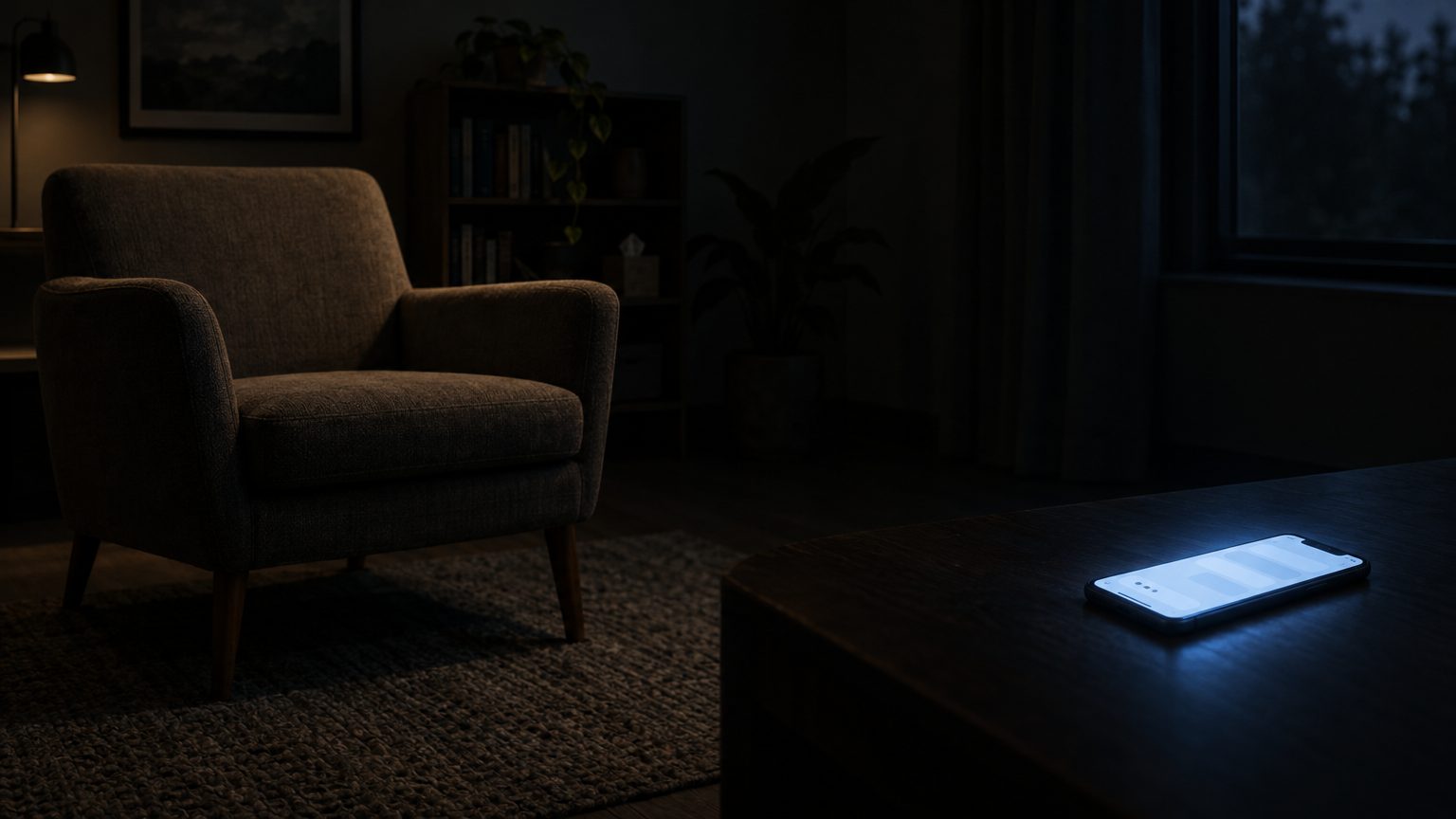
- Teens already confide in chatbots (half of German 14-to-17-year-olds use AI tools regularly), and the world has few people to confide in instead: the WHO counts a median of 13 mental health workers per 100,000 people.
- The good news is real but narrow. A purpose-built, monitored therapy chatbot cut depression symptoms by 51% on average in a randomized trial of 210 adults, against a comparison group with no access.
- The catch: teens mostly use general chatbots that nobody has tested that way, and among German users with diagnosed depression, 53% reported more thoughts of self-harm after use. Keep a human in the loop.
Half of German teenagers aged 14 to 17 now use AI tools or chatbots regularly in their free time, and 12% say they use a chatbot to cope with hard phases (JIMplus, 800 respondents, surveyed in May 2026). The same pattern shows up in China, where young people under heavy pressure and a stigma around therapy increasingly confide in DeepSeek, and where rules restricting AI "virtual partner" services for minors took effect on 15 July 2026, the day JIMplus was published. Most of the world has no therapist, so for the billion-plus people living with a mental health condition, teenagers among them, a chatbot is often the only help within reach, and the first hard evidence says a well-built one is better than nothing.
Teens already confide in chatbots, and the global shortage of mental health workers explains why
The Deutsche Depressionshilfe asked 2,500 Germans aged 16 to 39 in March 2026, and 65% said they had already talked to a chatbot about their own psychological problems, the way they would with a trusted friend or a therapist. In the US, Common Sense Media found that 72% of teens have used an AI companion and 52% use one regularly. For China, the Frankfurter Rundschau notes, exact usage figures do not exist yet.
The WHO counts more than a billion people living with a mental disorder and 727,000 suicide deaths in 2021, a leading cause of death among young people. The global median is 13 mental health workers per 100,000 people, and governments spend up to $65 per person on mental health in high-income countries and as little as $0.04 in low-income ones. Our World in Data puts low-income countries at roughly one psychiatrist per million people.
Rich countries run short as well. Nicholas Jacobson, who researches biomedical data science and psychiatry at Dartmouth, put it plainly: "There is no replacement for in-person care, but there are nowhere near enough providers to go around... For every available provider in the United States, there's an average of 1,600 patients with depression or anxiety alone." Public programmes are building a digital first contact. India's Tele-MANAS, a phone helpline rather than a chatbot, handled about 3 million calls between October 2022 and November 2025, and UNICEF runs a "Buddy" chatbot for psychosocial support in Uganda, Kenya and Tanzania.
The first hard evidence: a purpose-built therapy chatbot clearly beats no treatment
In March 2025, a Dartmouth team published the first randomized trial of a generative AI therapy chatbot, Therabot, in NEJM AI. It followed 106 people on the chatbot and 104 in a comparison group, all adults with a diagnosed condition. After eight weeks, the chatbot group showed an average 51% drop in depression symptoms, 31% in anxiety and 19% in concerns about body image and weight. Jacobson's reading: "The improvements in symptoms we observed were comparable to what is reported for traditional outpatient therapy, suggesting this AI-assisted approach may offer clinically meaningful benefits."
before you repeat any chatbot-therapy number, find out what the comparison group received. In this trial the 104 controls had no access to Therabot, so the 51% is a result against no treatment, which is the comparison that matters where no therapist exists.
A second result concerns access rather than symptoms. After an AI self-referral chatbot (Limbic Access) arrived in NHS services, referrals rose 15%, against 6% in comparison services, with the biggest gains among minority and gender-diverse patients.
The good news is about purpose-built bots, and teens mostly use general ones
The positive evidence and the warnings test different things. Therabot ran on a training set built from evidence-based psychotherapy practice, showed an on-screen button to call a crisis hotline when it detected suicidal content, and had researchers reviewing the conversations. The tool a teenager actually opens is usually a general chatbot: in the Depressionshilfe survey, ChatGPT was the most used (77%). Nobody has run a trial like Therabot's on those, and nobody has run one on minors, since the trial we have enrolled adults.
The same survey shows both sides. Among users with diagnosed depression, 85% called the conversations helpful, and among those who had been through professional psychotherapy themselves, 65% rated AI as good as or better than it. The same group also reported something hard: 53% said they had more thoughts of self-harm or suicide after using a chatbot, and 62% thought AI made seeing a doctor unnecessary.
A survey cannot show cause, and two readings fit the 53%: people in a bad stretch reach for a chatbot first, or a general chatbot answers badly at the worst moment. A Stanford HAI study supports the second reading in part, finding in five experiments that therapy-adjacent chatbots failed crisis scenarios, showed stigma and validated harmful framings. Telling the two apart would take a controlled study that measures those thoughts before and after use, with a comparison group, and that is the field's open problem.
Two more findings give parents something to watch. An MIT Media Lab and OpenAI study linked heavier daily ChatGPT use to more loneliness, dependence and problematic use. And after a wrongful-death lawsuit over a 14-year-old's suicide, Character.AI announced on 29 October 2025 that under-18s would lose open-ended chat by 25 November, so for that app the answer to the teen safety question was to keep minors out.
Eva-Lotta Brakemeier, president of the Deutsche Gesellschaft für Psychologie, names the risk this way: "Problematisch wird es, wenn Chatbots professionelle Versorgung ersetzen oder als gleichwertig wahrgenommen werden." (It becomes a problem when chatbots replace professional care or are seen as equivalent to it.) She calls the low-threshold first contact an advantage at the start and asks for binding age limits, transparency duties, crisis notices and a package-leaflet-style warning on mental health tools.
Regulators are drawing lines, and the fight that matters is quality rules versus bans
China announced its Interim Measures for AI "Anthropomorphic Interaction" Services on 10 April 2026, and they took effect on 15 July, described as the world's first specialized emotional AI law. Article 14 bans virtual partner and virtual relative services for minors. The rules also require guardian consent under 14, reality reminders, break prompts after two hours, and human takeover with guardian contact when a user shows suicidal intent. China pairs the companion ban with a duty to hand suicidal users to a human.
In the US, Illinois banned AI-delivered therapy from 1 January 2026, and NCSL tracks four states with outright bans by mid-2026. A ban on AI therapy only helps where a human therapist can take over, and low-income countries, with about one psychiatrist per million people, rarely have one. The sharper question for regulators is what a safe chatbot must do in a crisis, and who checks.
If a teenager you know uses a chatbot: ask, watch, and keep a person in the loop
Ask what they use it for, what it says when they feel low, and whether it ever disagrees with them. The last question matters because Tübingen researcher Isabel Brandhorst, quoted by the Frankfurter Rundschau, points out that chatbots mostly confirm what users say instead of challenging it.
Watch for three things: heavy daily use, the chatbot standing in for people (Brakemeier warns of emotional dependence displacing real contacts), and the chatbot standing in for a doctor. Professor Ulrich Hegerl of the Stiftung Deutsche Depressionshilfe says people with depression should keep turning to GPs, psychiatrists and psychotherapists.
open the help or terms page of the app your teen uses and look for three things: what it does when a user mentions self-harm (a crisis line or a handoff to a person), whether it has an age setting, and whether it claims to replace a doctor. These echo what Brakemeier asks regulators to require and what China's rules mandate. If you find none of them, treat it as a general chatbot.
If a young person talks about hurting themselves, or you worry they are in danger, contact a trusted adult, a doctor, or your local emergency number or crisis line.
What to watch: a trial of a well-built chatbot on teenagers, with crisis care measured
The evidence that would settle this is a Therabot-style trial in minors that measures crisis outcomes, and a rule that rewards products which pass it. Until then, a chatbot is often the only help within reach for the world's young people, a well-built one beats nothing, and whether the one in their pocket is well-built is still open.